Enquire Now


Pathways World School Gurgaon
Consistently Ranked #1 Top International Day cum Boarding School in Delhi, Gurgaon & India.
Begin Your Application
The first step toward joining Pathways World School.
01 The Principle Life does not present itself divided into subjects. Neither does the PYP
Rather than a period of mathematics followed by one of geography, learning in the PYP is organised around socially and globally driven themes which provide a starting point from which children can explore issues and opportunities as experienced in the real-world context — how communities organise themselves, what makes something fair, how the planet sustains life. Children draw on mathematics, languages, science, social studies, physical, social and personal education, and the arts together in examining them, as knowledge is genuinely used.
The earliest years of the PYP, from the Toddlers stage, look different in form but not in philosophy: learning through purposeful play, story and rich conversation rather than worksheets, building the confidence, language and curiosity that carry a child into structured inquiry as they grow. There is no separate curriculum here — only the same beliefs, met at a different stage.
6
Global themes explored a year
8:1
Pupils to each teacher
The question comes first
A lesson here more often begins with a question than an answer — this is what the IB means by inquiry. A child who has wondered why something happens, before being told, holds the reason differently and for far longer. And understanding does not arrive on a schedule; each child is allowed to reach it at their own pace.
Classrooms without walls
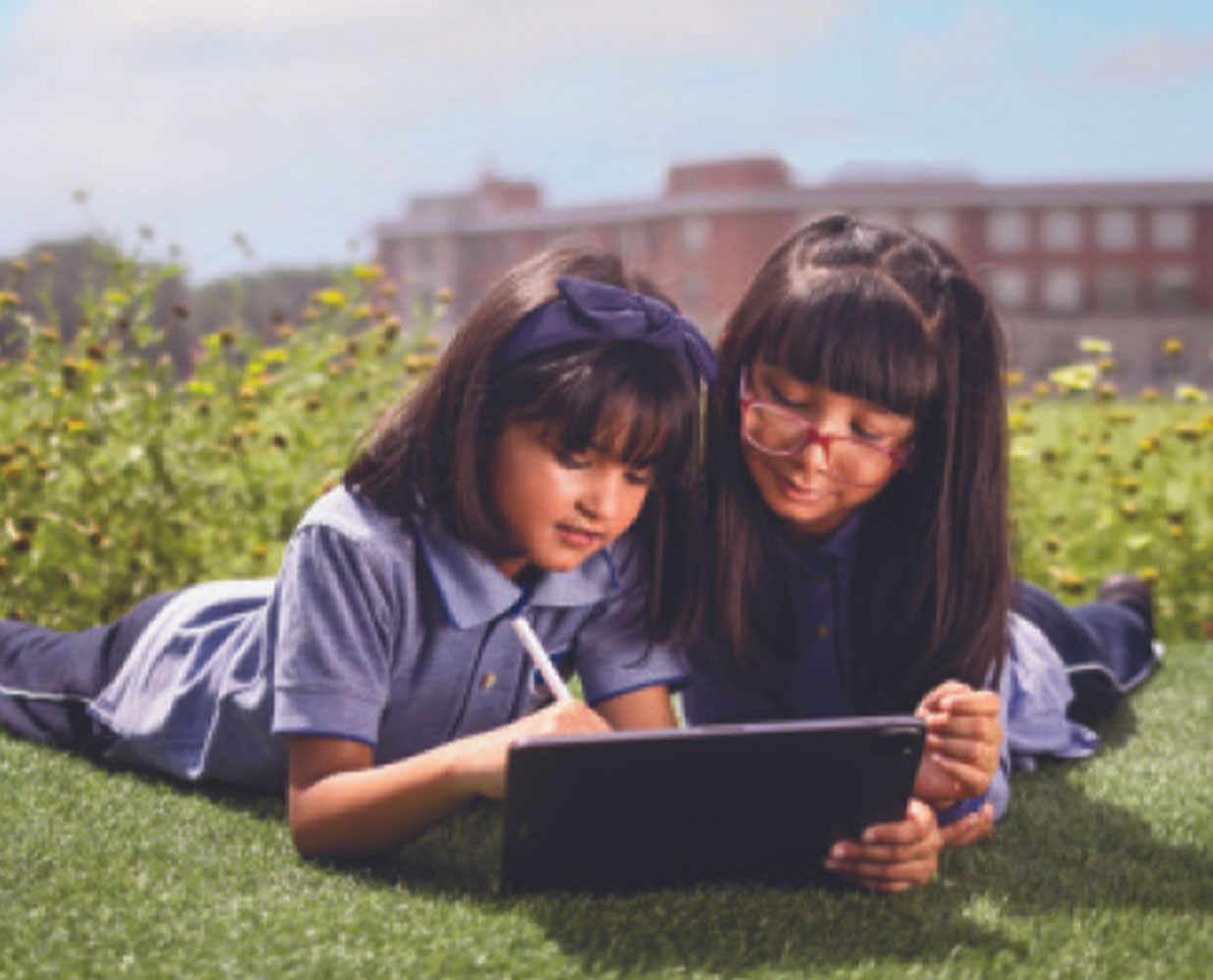
A great deal of the learning happens outdoors. Thirty-two green acres in the Aravalli foothills, gardens the children plant themselves, and a petting zoo where a child may feed an animal and work out what a living thing actually needs — a different order of knowing from a page about animals.
No subject is the extra one
Music, theatre, dance and visual art sit on the timetable beside mathematics, as do physical education, sport, yoga and mindfulness — not as relief from the real work, but as part of it. A child measured only on what they can write will quietly conclude that writing is all they are good at.
Families new to the IB encounter a good deal of unfamiliar language. Set out below is what each term means for a child, and for the day they actually have at school.
Six significant, challenging and engaging global themes, each explored over several weeks, long enough to become invested in, and connected across every subject.
Mathematics, languages, science, social studies, physical, social and personal education, and the arts brought jointly to bear on a single question, as they are within any profession a child will one day enter.
Children build conceptual understanding through genuine choices about what to investigate and how to show what they've grasped, so ideas are owned rather than simply received.
Caring, principled, open-minded and reflective, among others, woven into how a child is spoken to and what is noticed in them each day — not a poster on a wall, but a daily practice.
A self-directed project, on an issue of the child's own choosing, researched and presented to the wider school community.
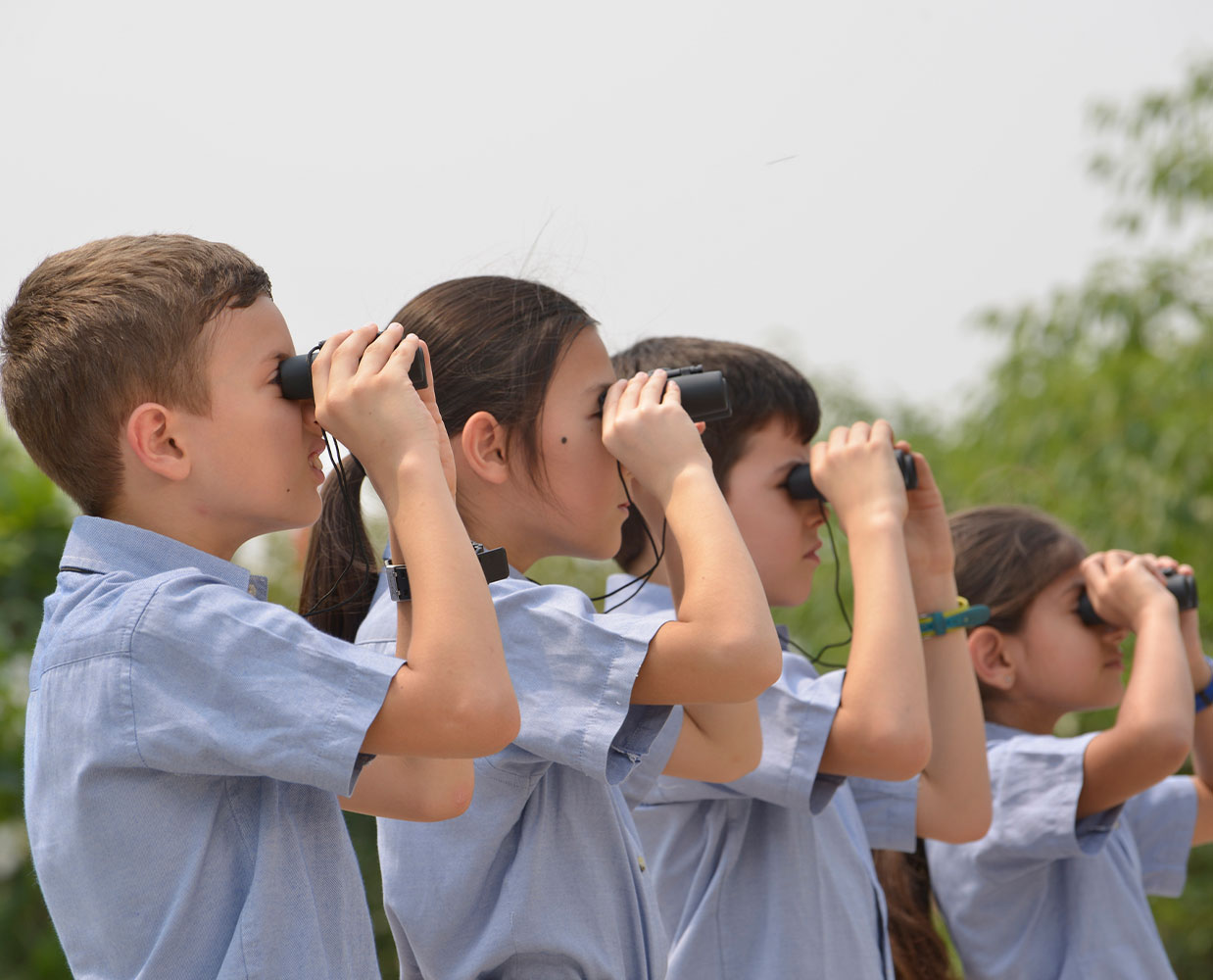
A visitor to a Pathways PYP classroom notices first that the children are in conversation: presenting, questioning, explaining their reasoning. Communication and collaboration are not extracurricular here — they are taught, assessed and valued alongside reading and mathematics.
At a ratio of eight to one, faculty know each child well enough to see what they need next: a harder question for the child ready to reach further, and a steadier hand for the child who needs more time to get there.
Learning Support →32 Acres
Outdoor learning campus
50%
Faculty resident on campus
Assessment in the PYP is continuous, tracking what a child understands and where they should be extended next. Parents receive detailed reports alongside student-led conferences at which the child explains their own learning.
The PYP is designed as the first stage of a continuum rather than a self-contained programme. Inquiry deepens into the MYP’s interdisciplinary learning without a change of school, philosophy or momentum.
Children transfer to us at nearly every grade each year. Our faculty are experienced in supporting the transition, and the inquiry approach is generally found liberating rather than unfamiliar.
Next: the Middle Years Programme
The questions grow more demanding and independence becomes real — without change of school, philosophy or momentum.
→