Enquire Now


Pathways World School Gurgaon
Consistently Ranked #1 Top International Day cum Boarding School in Delhi, Gurgaon & India.
Begin Your Application
The first step toward joining Pathways World School.
01 The Principle Students move from asking what the answer is to asking why it matters
Every MYP unit connects academic content to a context in the world: identity, globalisation, fairness, innovation, sustainability. Students master eight subject areas, from mathematics and the sciences to languages, the arts, design and physical and health education, encountering each as a lens on the world rather than a chapter to be completed.
Alongside subject content, every student explicitly builds their Approaches to Learning (ATL) — the skills of managing time, researching with integrity, thinking critically and working well with others — which the programme treats as every bit as deliberate as what is being studied.
8
Subject groups studied
5
Years across the programme
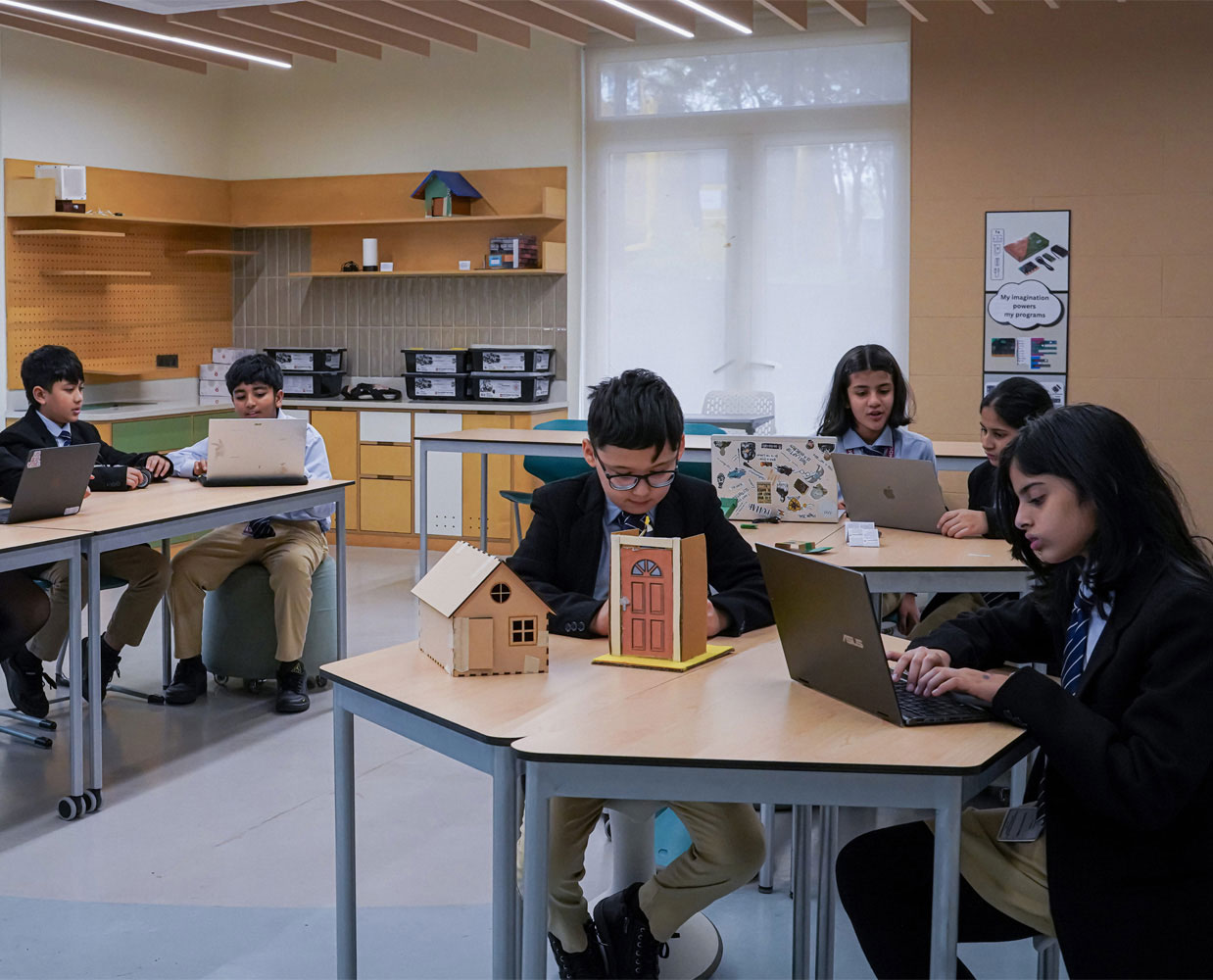
In MYP 1–3, learners experience the full breadth of the MYP — engaging with every subject group, with the freedom to choose their own path in Language Acquisition. This is a stage of exploration, where no door is closed too soon. Beyond the assessed curriculum, students immerse themselves in Dance, Music, Theatre and Visual Arts, discovering forms of expression that build confidence, creativity and collaboration.
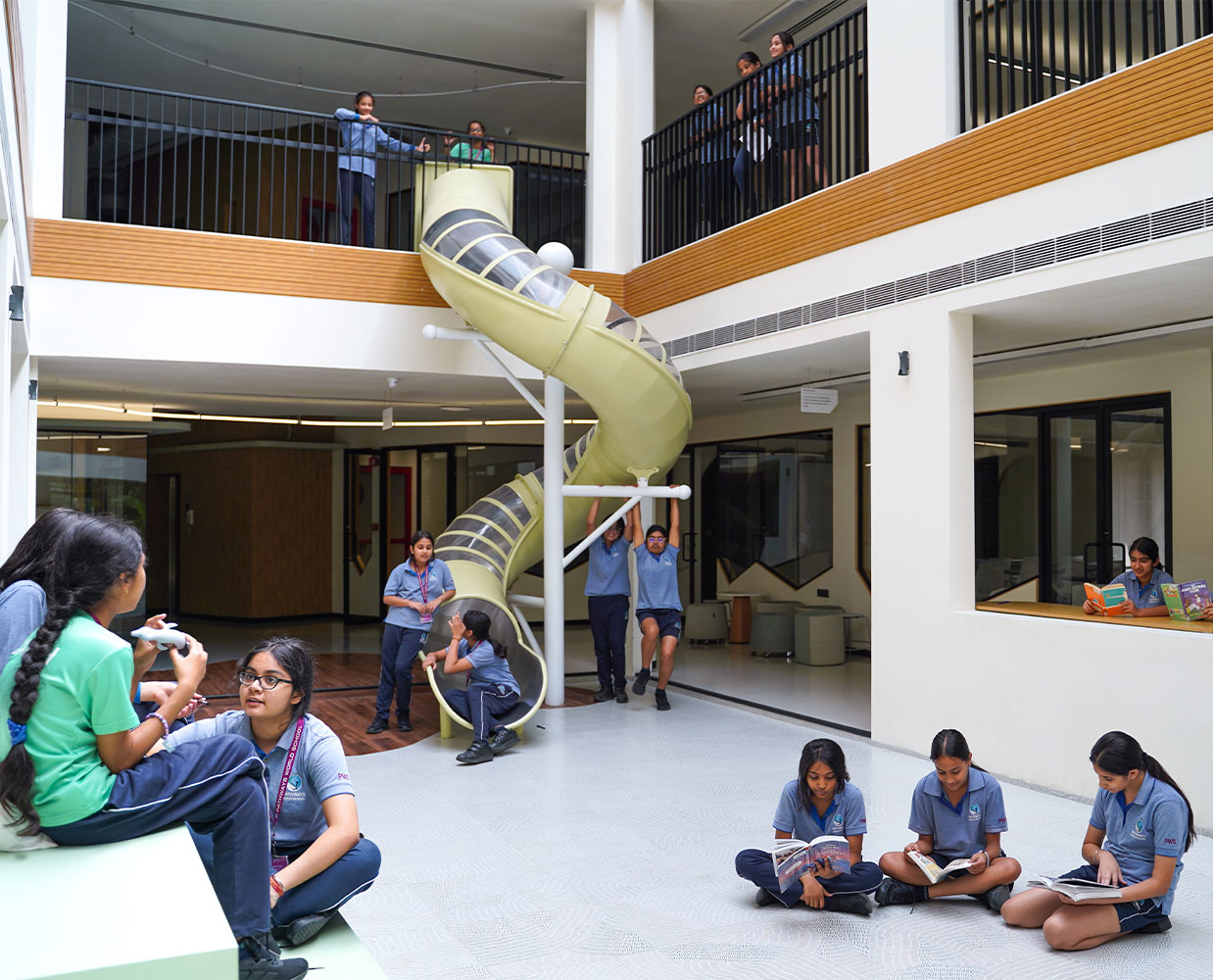
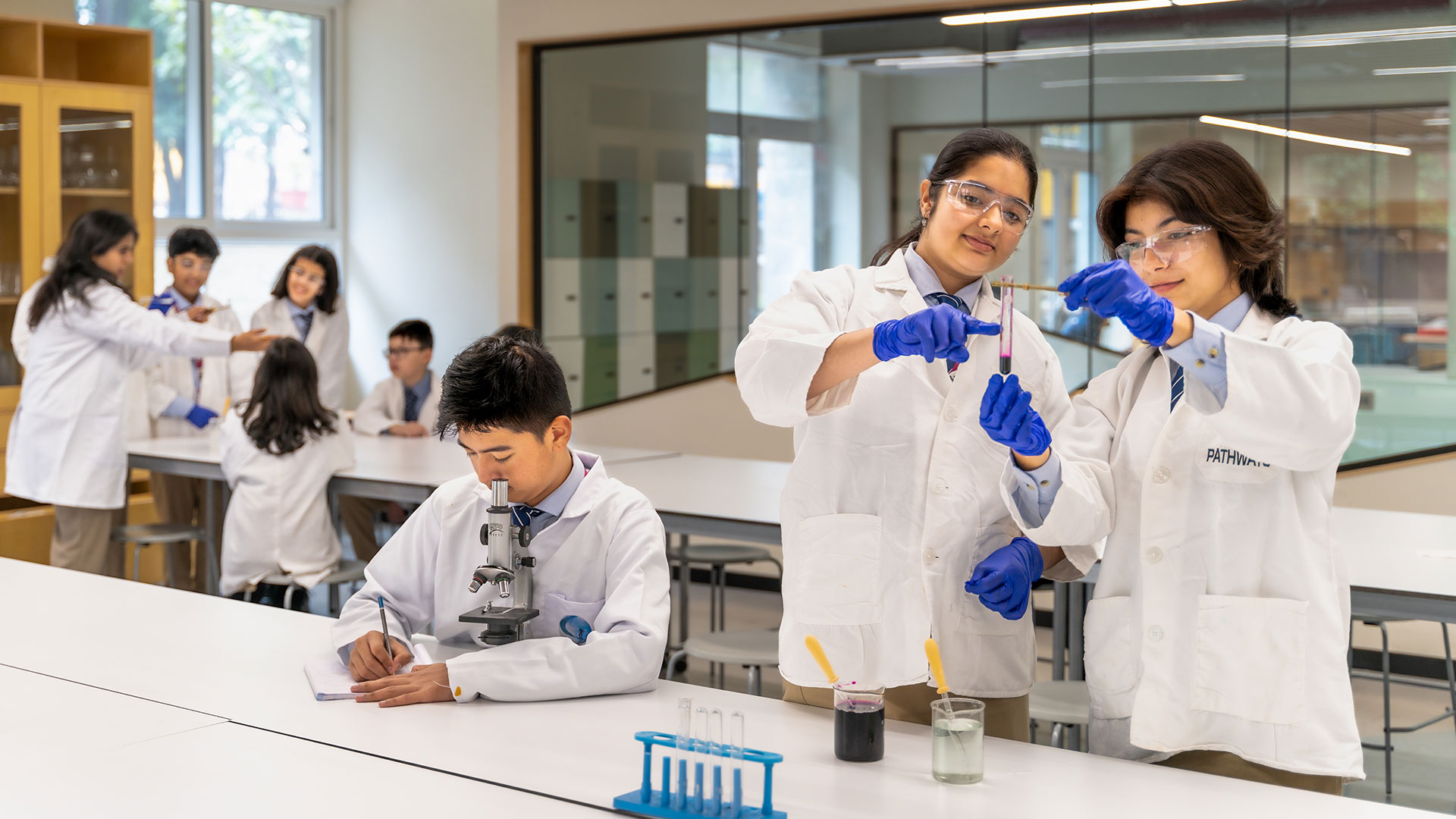
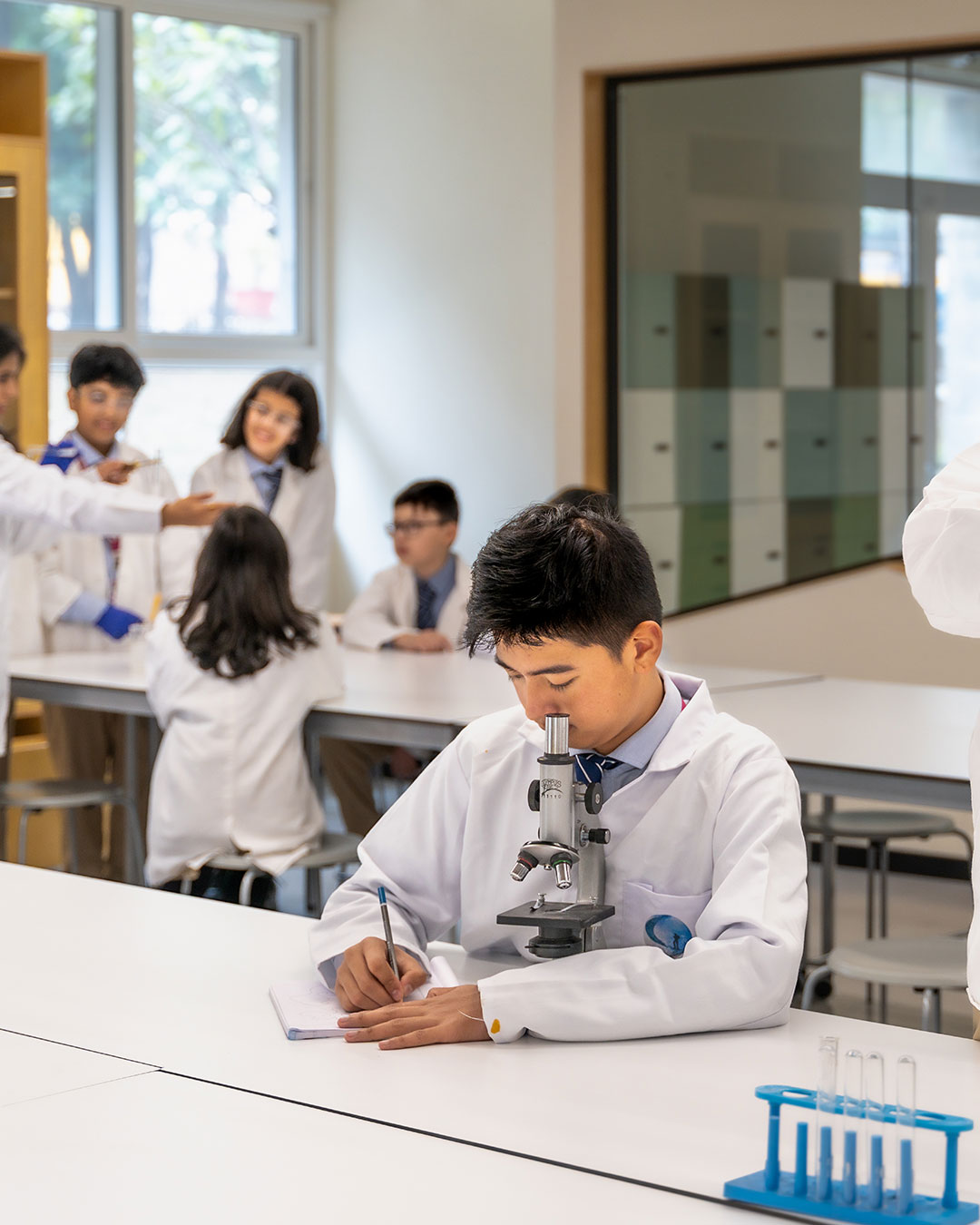
This breadth of learning comes alive in the Aryabhata Block, our revamped Middle School academic wing. Flexible learning commons, glass-walled rooms with writeable tables and smart boards, and slide-collapsible walls create spaces built for collaboration, team teaching and fluid group work. An Innovation Centre, DIY Corner, and dedicated Science and Design labs give students room to experiment and design, while outdoor decks and podcast recording rooms extend learning beyond the traditional classroom.
At this stage, breadth is the point. Lower MYP lays out a wide foundation — in curriculum and in space — so that when learners begin narrowing their focus in MYP4, they do so from a place of genuine self-discovery.
The Personal Project
A student-centred, age-appropriate practical exploration in which a student consolidates their learning across the whole programme. This independent learning experience, of around 25 hours, is chosen and pursued by the student themselves, and formally assesses their ATL skills of self-management, research, communication, and critical and creative thinking.
Learning to think across boundaries
The world a student is growing into does not sort itself into subjects — climate is science and politics at once, a new venture is mathematics and design together. Once each year, MYP students work on a unit that refuses to belong to a single discipline, where two subjects meet one shared question. A quiet rehearsal for the thinking that will be asked of them everywhere that matters.
Assessed on a screen, as the world now works
Not every school chooses on-screen assessment. Pathways does — and in an age where artificial intelligence is reshaping how knowledge is created and used, fluency with technology is no longer optional. Students who have learned to think carefully, and to express that thinking on a screen, are ready for the world they are actually entering.
The MYP introduces several terms families will encounter. Set out below is what each one means for a student, and for the work they actually do in school.
Science and ethics considered jointly. Mathematics and design applied to a common task, as they are within every modern field.
Explicit development of managing time, researching with integrity, thinking critically, and working productively alongside others.
Students apply what they know to genuine need in real communities, and discover they may contribute now rather than one day.
A student-centred, age-appropriate practical exploration consolidating a student's learning across the programme, formally assessing their ATL skills of self-management, research, communication, and critical and creative thinking.
Marked against standards rather than against classmates, so a student always understands what stronger work consists of.
MYP on-screen examinations are distinctive because they focus 75% of the assessment explicitly on inquiry, communication and critical thinking, rather than knowledge recall — using drag-and-drop, video, simulations and on-screen graphing tools drawn from interfaces students already know, with hover-text support built in for English language learners.
Skill over recall
Students use an authentic assessment approach to demonstrate conceptual understanding and apply knowledge in complex, unfamiliar contexts — including global contexts — rather than reciting what was taught.
Built for the interface students know
Tasks sample, simulate or replicate school-based assessment practice, with an interface drawn from the social and web-based tools students already navigate daily.
A capstone in interdisciplinary thinking
The interdisciplinary on-screen examination is the only assessment for 15–16 year-olds anywhere that tests the ability to connect different areas of knowledge — a fitting culmination of the collaboratively planned interdisciplinary units students complete every year of the programme.
Students who complete MYP Year 5 receive IB MYP course results, reporting their achievement including the successful completion of the Personal Project and the school's expectations for Service as Action — externally validated through MYP eAssessment.
The MYP Certificate is the programme's highest standard of achievement, requiring participation in at least Year 5 and IB-validated grades of 3 or higher across five on-screen examinations, two ePortfolios and the Personal Project — at least 28 points total across all seven components, alongside the school's expectations for Service as Action. A Bilingual Certificate is additionally available to candidates who achieve grade 3 or higher in a second language and literature course, interdisciplinary learning, or the Personal Project completed in a different response language.
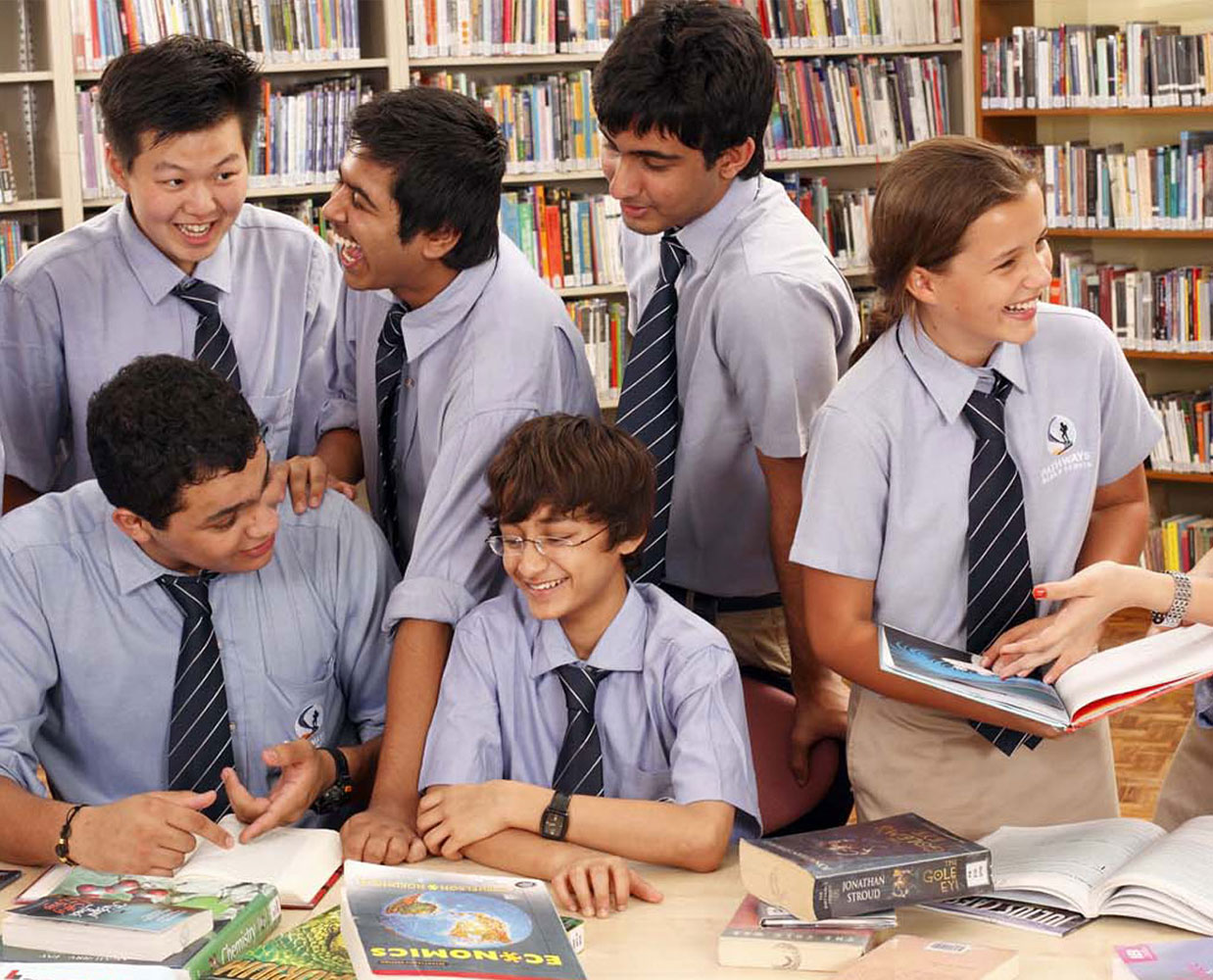
Social and emotional learning runs through the MYP rather than beside it. Advisory groups, dedicated counsellors and a ratio of eight to one ensure that every student has adults who notice: when confidence falters, when friendships waver, when an interest merits encouragement. More than half the faculty live on campus, so care does not conclude with the school day.
Balance is equally deliberate. Sport, the arts, leadership, expedition and exchange form part of the week, because who a young person becomes beyond the classroom shapes who they are within it.
Student wellbeing →30%
IB EXAMINERS, WORKSHOP LEADERS AND EVALUATORS
50%
Faculty resident on campus
Directly. The Personal Project rehearses the independence the Extended Essay requires, Approaches to Learning establish the study habits the Diploma presumes, and criterion-based assessment familiarises students with how IB work is judged.
It is. Students study eight subject groups across all five years, assessed against published international criteria. What distinguishes it is that rigour is directed at understanding and application rather than recall.
Students transfer to us at nearly every grade each year. For those arriving from non-IB curricula we ordinarily recommend the Pre Term Programme, a preparatory period in April preceding the July intake.
Next: the Diploma Programme
All that the MYP has established, now directed towards the most respected pre-university qualification in the world.
→